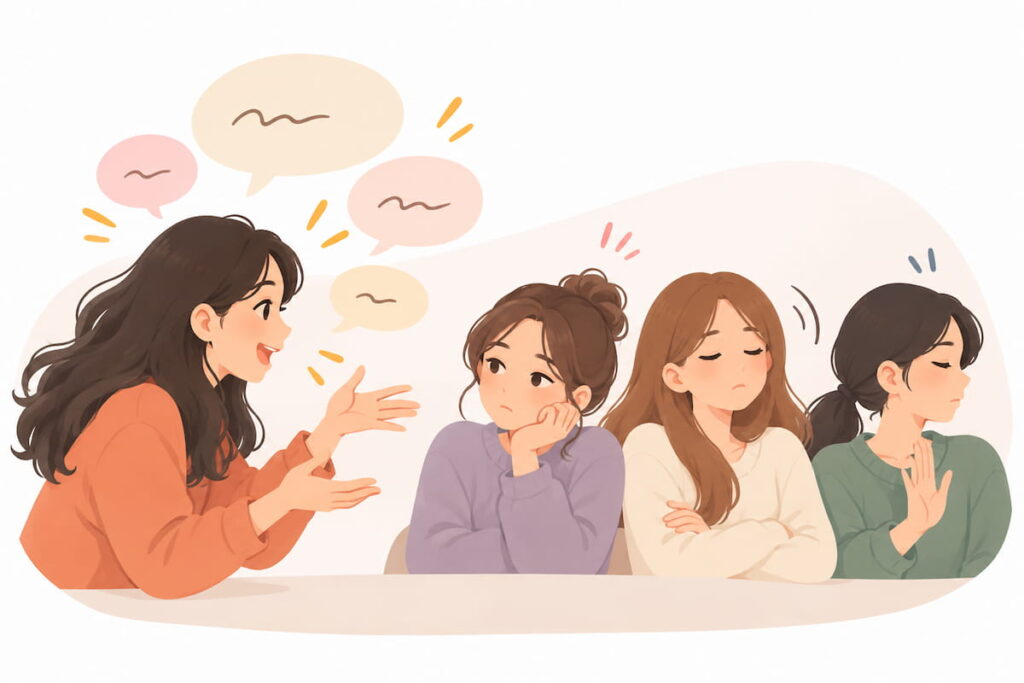

Have you ever heard someone describe another person by saying, “They’re actually a nice person, but I just don’t feel comfortable being around them”?
Maybe you try to be understanding, treat people kindly, and offer help whenever you can. You believe you’re doing your part, yet things don’t always turn out as expected. At home, conversations become arguments. At work, people misunderstand your intentions. Even among friends, you sometimes feel unappreciated or left out.
When this happens repeatedly, it’s natural to question the people around you.
Why don’t they understand me? Why do I always seem to get hurt when I’m genuinely trying my best?
We often look for answers in how others treat us, without considering another possibility.

What if some of the things we believe we’re doing right are actually contributing to these difficulties?
Think back to that person others find uncomfortable to be around. What if someone has felt the same way about us?
We know our intentions and the reasons behind our actions. But having good intentions doesn’t necessarily mean we understand how others experience our behavior.
Sometimes, relationship difficulties aren’t entirely about the people around us. They may also come from habits or behaviors within ourselves that we haven’t recognized.
Of course, people have different personalities and expectations, and not every relationship problem is our responsibility.
But when similar difficulties keep appearing in our family, friendships, or workplace, perhaps it’s worth looking beyond what others have done and asking ourselves one simple question:
Am I treating people as well as I believe I am?

Table of Content
1. Why Do We Struggle With Relationships Even When We Think We’re Good People?
2. Good Intentions Don’t Always Create Good Relationships
i. The friend who always has something to say about everything
ii. When being honest doesn’t feel helpful
3. The Hidden Habits That May Be Making Our Relationships Difficult
i. We listen to respond rather than understand
ii. We feel the need to explain ourselves whenever someone disagrees
iii. We expect others to think and respond the way we do
iv. We notice what others do wrong more easily than what we do ourselves
4. Why Is It Sometimes Easier to See Ourselves as the Victim?
i. The family member who always wants what’s best for everyone
ii. When the problem might not always be other people
5. How Understanding Ourselves Can Help Us Build Healthier Relationships
i. Pay attention to repeated patterns
ii. Learn to receive feedback without immediately defending yourself
iii. Focus on understanding rather than being understood all the time
iv. Give yourself permission to keep learning
1.Why Do We Struggle With Relationships Even When We Think We're Good People?
Most of us believe we’re good people, especially when we know we’ve been trying our best. We help because we care, offer advice because we want the best for others, and speak honestly because we believe it’s the right thing to do.
But have you ever wondered why something we do with good intentions can sometimes make others feel uncomfortable?
Think about a parent who constantly reminds their child what to do, from choosing a career to making everyday decisions. The parent believe they’re showing love and concern, hoping to protect their child from making mistakes.
But from the child perspective, those same reminders might feel quite different. Instead of feeling supported, they may feel criticized, pressured, or as though their parents don’t trust them to make their own decisions.
The intention comes from love, but the experience doesn’t always feel that way.
The same thing can happen in friendships, at work, or in everyday social interactions. We might think we’re being helpful, honest, or considerate, while others experience our behavior in a completely different way.
Because we’re so familiar with our own good intentions, it’s easy to overlook how we might be contributing to relationship difficulties.
This is where self-awareness becomes important.

Instead of wondering why someone doesn’t appreciate our efforts, perhaps we could ask ourselves, “Was what I did actually helpful to them, or was it simply what I believed was best?”
Sometimes, improving our relationship begins with recognizing that being a good person and making others feel understood aren’t always the same thing.
2. Good Intentions Don't Always Create Good Relationships
Sometimes, we genuinely want to help someone, but what we do doesn’t always make them feel supported. We might believe we’re doing something good without realizing how differently the other person experiences it.
The friend who always has something to say about everything.
Have you ever met someone who seems to have an opinion about almost everything you do?
You mention wanting to change jobs, and they immediately explain why it’s a bad idea. You share something you’re excited about, and they point out what could go wrong. Even a small personal decision somehow turns into something they need to correct.
Over time, you might stop sharing things with them. Not because you dislike them, but because every conversation starts to feel exhausting.
If you asked why they do this, they might simply say, “I’m just trying to help. I don’t want you to make unnecessary mistakes.”
And they may genuinely mean it.
But there’s a difference between offering helpful advice and making someone feel like their decisions always need your approval.
The same thing happens when a friend shares something that’s been bothering them, We might immediately offer solutions, thinking we’re being supportive.
But what if they weren’t looking for advice in the first place?
Maybe they just wanted someone to listen and understand how they feel.
Without realizing it, our attempt to help may leave them feeling unheard instead.
This is where the difference between good intentions and their actual impact on our relationship becomes important. We may know why we’re doing something, but that doesn’t always mean we understand how it makes others feel.

When being honest doesn't feel helpful
We might value being straightforward and believe that telling people exactly what we think is a sign of sincerity. But honesty without consideration can sometimes feel harsh.
For instance, telling a coworker, “Your idea won’t work,” might seem like an efficient way to communicate a concern.
Instead, saying, “I see what you’re trying to do, but maybe we could approach this part differently,” open up a conversation and makes the other person feel that their ideas are being considered rather than dismissed.
The concern is similar. The way it’s communicated is different.
This doesn’t mean we should hide our opinions or constantly adjust ourselves to keep everyone comfortable.
It simple means that how we express something can be just as important as what we’re trying to express.
Good relationships aren’t built on good intentions alone. They also depend on our willingness to understand how our words and actions are received.

3. The Hidden Habits That May Be Making Our Relationships Difficult
Sometimes, the biggest obstacles in our relationships aren’t obvious mistake.
They’re ordinary habits we’ve practiced for so long that we no longer notice them.
We might even consider some of these habits positive qualities.
Here are a few common behaviors we may not realize are affecting our relationships:
We Listen to Respond Rather Than Understand
We Feel The Need to Explain Ourselves Whenever Someone Disagrees
We Expect Others to Think and Respond The Way We Do
We Notice What Others Do Wrong More Easily Than What We Do

We listen to respond rather than understand
Imagine meeting a friend for coffee after a difficult week.
Your friend begins sharing something that’s been bothering them. But before they finish, you respond with a similar experience of your own.
They talk about feeling stresses at work, and suddenly the conversation becomes about how much worse your workplace is.
They mention a personal accomplishment, and you immediately begin describing something you’ve achieved.
At first, it might not seem like a big deal. After all, sharing experience is a normal part of friendship.
But when it happens repeatedly, your friend may begin feeling that there’s little room for their own thoughts.
They might find themselves listening more than sharing.
What’s worth noticing is that you may not be intentionally dismissing them. You might genuinely believe you’re connecting by sharing similar experiences.
This is where a habit that feels friendly to one person can feel exhausting to another.
Sometimes, connecting with someone doesn’t require finding similar story from our own life.
It simply requires allowing their story to be heard.

We feel the need to explain ourselves whenever someone disagrees
Nobody enjoys being misunderstood.
When someone questions our behavior or points out a mistake, our first reaction might be to defend ourselves.
We explain why we acted that way, what we intended, and why the other person shouldn’t have take it negatively.
There’s nothing wrong with explaining ourselves. Misunderstandings sometimes need clarification.
But when we’re always focused on defending our intentions, we may miss an opportunity to understand the other person’s experience.

For example, someone might say, “I felt uncomfortable when you interrupted me during the meeting.”
Our immediate response could be, “I wasn’t trying to interrupt you. I just wanted to add something important.”
That explanation might be true.
But it doesn’t change the fact that the person felt interrupted.
Sometimes, a more helpful response is simply, “I didn’t realize I was doing that. I’ll try to be more mindful next time.”
Acknowledging someone’s experience doesn’t mean agreeing with every interpretation they have. It means being willing to consider a perspective beyond our own.

We expect others to think and respond the way we do
We all develop personal ideas about what it means to be respectful, caring, responsible, or supportive.
The difficulty begins when we assume everyone should follow those same expectations.
Perhaps you believe that people who care about each other should communicate frequently. When a friend doesn’t respond to your message for several days, you might feel ignored.
But that friend may express care differently. They might value independence, need more personal space, or simple have different communication habits.
Without discussing those difference, it’s easy to interpret someone’s behavior through our own expectations.
And sometimes, the disappointment we feel comes less from what the other person intended and more from what we expected them to do.
Leaning to recognize that difference can prevent unnecessary misunderstandings.

We notice what others do wrong more easily than what we do ourselves
When a disagreement happens, we usually remember how the other person made us feel.
We remember their tone, their words, and the moment we felt hurt or disrespected.
What we may not remember as clearly is our own tone, the assumptions we made, or the things we said before the disagreement escalated.
This doesn’t mean our feelings are invalid.
It means that our experience of a situation is only one part of what happened.
If we repeated experience similar conflicts with different people, it may be worth looking for patterns.
Not to prove that we’re the problem, but to understand whether there’s something we could approach differently.
4. Why Is It Sometimes Easier to See Ourselves as the Victim?
When something goes wrong in a relationship, it’s natural to focus on how we’ve been affected.
We remember the disappointment, the unfair words, or the times when our efforts went unnoticed. And because we know how much we’ve tried, we might begin to believe that the problem must be coming from someone else.
I’ve done so much for them. Why can’t they see that?
I’m always trying to be understanding. Why don’t they treat me the same way?
These feelings are understandable. Nobody wants to feel that their kindness or effort has been taken for granted.
But there’s an interesting question worth considering.
What if being so certain about our good intentions sometimes prevents us from recognizing our own mistakes?
The family member who always wants what's best for everyone
Who always wants what’s best for everyone.
Imagine you’re someone who cared deeply about your family and always tries to look out for them.
You remind them to take care of their health, offer advice about their decision, and point out things they could do better. To you, these are simple ways of showing love and concern.
But instead of appreciating your efforts, your family sometimes become frustrated or avoid discussing personal matters to you.
You might feel hurt, wondering why they don’t recognize how much you care.
But perhaps there’s another side you haven’t considered.
What feels like care and guidance to you might feel like constant criticism or pressure to them.
You may genuinely want the best for your family, but that doesn’t always mean they need you to guide every decision.
Sometimes, showing live isn’t about helping someone make every decision, but trusting them enough to make their own.
When the problem might not always be other people
Have you ever noticed how some people seem to connect with others so naturally, while others struggle to feel included, even when they’re trying their best?

Imagine two people volunteering for the same organization. Both are hardworking, responsible, and willing to help. But when one needs support, others seem hesitant to step in, while the other receives help and cooperation.
The first person might wonder, “I’m working just as hard and helping others, so why don’t people treat me the same way?”
And perhaps they haven’t done anything obviously wrong.
But what if the difference isn’t about how much they contribute, but how people feel when interacting with them?
Maybe they often correct others without realizing it, rarely consider different opinions, or unintentionally make conversations feel like a competition.
From their perspective, they’re simply being capable and responsible. But others may experience those same behaviors differently.
Over time, these small interactions can influence how comfortable people feel around them.
Of course, not receiving support doesn’t automatically mean someone has a problem with their personality. Sometimes, people are genuinely unfair, and not every relationship will work out.
But when similar experiences keep happening across friendships, family, and social relationships, perhaps it’s worth looking beyond how others treat us and considering how we treat them.
Sometimes, the problem isn’t that we’re doing something obviously wrong. It’s that we’re so certain we’re doing everything right that we overlook the things we could improve.
That’s where self-reflection become valuable.
It isn’t about blaming ourselves for every difficult relationship or taking responsibility for someone else’s behavior. It’s about recognizing what we can control and being willing to understand ourselves a little better.
5. How Understanding Ourselves Can Help Us Build Healthier Relationships
Recognizing our own patterns can feel uncomfortable, especially when we’re spent years believing that a particular behavior is one of our strengths.
Maybe we’re always considered ourselves honest, only to realize that we sometimes speak without enough consideration.
Maybe we take pride in being helpful, but occasionally offer help that people never asked for.
Or perhaps we believe we’re good listeners, yet notice that we often interrupt when we disagree.

These realizations aren’t necessarily pleasant.
But they give us something valuable: a clearer understanding of what we can improve.
Improving our relationship doesn’t always require making enormous changes to our personalities.
Sometimes, it begins with a few small adjustments, which I listed below:

- Pay attention to repeated patterns
- Learn to receive feedback without immediately defending yourself
- Focus on understanding rather than being understood all the time
- Give yourself permission to keep learning
Pay attention to repeated patterns
If you notice similar difficulties happening across different relationships, try looking at what those situations have in common.
Perhaps you frequently feel that people don’t listen to you. Or you often leave conversations feeling unappreciated.
Rather than immediately deciding what those experiences mean, consider the circumstances surrounding them.
What usually happens before the disagreement?
How do you respond when someone has a different opinion?
Are there expectations you’ve never clearly communicated?
You don’t need to find an answer immediately.
Simply becoming curious about these patterns can help you recognize things that previously went unnoticed.

Learn to receive feedback without immediately defending yourself
Receiving criticism can be difficult, especially when we believe we’ve done something with good intentions.
But feedback can sometimes reveal a side of our behavior that we can’t easily see on our own.
The next time someone tells you that something you said or did affected them negatively, try listening before explaining.
You don’t have to agree with everything they say.
Instead, give yourself enough time to understand their perspective and decide whether there’s something useful to learn.
A simple question like, “Can you help me understand what made you feel that way?” can open a conversation that might otherwise become an argument.
Focus on understand rather than being understood all the time
We all want people to recognize our feelings and intentions.
But healthy relationships involve making space for other people’s experiences, too.
Sometimes, that means allowing someone to finish speaking even when we disagree.
Other times, it means accepting that someone may see a situation differently without either person necessarily being wrong.
We don’t have to abandon our opinions to understand someone else’s.
In face, being able to hold our own perspective while remaining open to another person’s is on of the small changes that can make communication feel less like a competition.

Give yourself permission to keep learning
One thing worth remembering is that self-awareness isn’t something we achieve once and never need to revisit.
We change. Our relationships change. The way we communicate and respond to situations can change, too.
There may be things we handle well today that we struggled with years ago. And there may still be habits we haven’t noticed yet.
That’s part of growing as a person.
Rather than trying to prove that we’re always kind, understanding, or right, we can focus on becoming a little more aware of how our behavior affects the people around us.
Not every effort will lead to an immediate improvement. Some relationships may remain difficult even after we’ve made meaningful changes.
But understanding ourselves more clearly gives us a better chance of responding thoughtfully instead of repeating the same patterns without knowing why.
6. Let The Change Begin With Us
It’s easy to believe that having a good intentions should naturally lead of good relationships.
We try to be helpful, treat people well, and so what we believe is right. So when our relationships become difficult, we may feel confused about why our efforts aren’t bringing the results we expected.

But relationships involve more than what we intend to do.
They also involve how we communicate, how we respond to differences, what we expect from others, and whether we’re willing to recognize the things we may not see about ourselves.
That doesn’t mean we should question every decision we make or assume we’re responsible whenever someone treats us poorly.
It simply means being open to the possibility that our understanding of ourselves is never completely finished.
Sometimes, what we believe is our strength may need a little adjustment.
Something we’ve always done with good intentions might not be as helpful as we thought.
And recognizing that doesn’t take away from the good person we’re trying to be.
It gives us an opportunity to grow.
We may not be able to control how everyone treats us or how every relationship turns out.
But we can gradually become more aware of how we show up in those relationships.
Perhaps that’s where some of the most meaningful changes begin.
Not by trying harder to prove that we’re good people, but by becoming more willing to understand the parts of ourselves we haven’t noticed before.

FAQ
Why do I struggle with relationships even though I’m a good person?
Being kind and having good intentions doesn’t always mean our relationships will go smoothly. Sometimes, the way we communicate, react, or expect others to behave can create misunderstandings without us realizing it. Taking a moment to see things from another person’s perspective may help us notice what we could do differently.
Why do I keep having problems with different people?
There could be many reasons, from different personalities and expectations to the way we communicate with each other. But if you notice similar problems happening with different people, it might be worth looking at how you respond in those situations. Sometimes, we repeat certain habits without even noticing them.
How do I know if I’m contributing to relationship problems?
Think about how you usually react when someone disagrees with you or points out something you’ve done. Do you try to understand their perspective, or do you immediately feel the need to explain yourself? You could also ask someone you trust for their honest opinion. It’s not about finding fault in yourself, but noticing where you might have room to grow.
Can becoming more self-aware improve my relationships?
Yes, it can make a difference. When we become more aware of our habits, emotions, and reactions, we can better understand how they affect the people around us. It doesn’t mean every relationship will suddenly become easier, but small changes in how we listen, communicate, and respond can gradually help us build heathier connections.